
The trigger: marketing has changed pace
For a long time, “adding AI to marketing” felt like a vague promise. Since the wave of generative models, it has become a step change: AI no longer affects only isolated use cases. It is moving into entire functions, and marketing/sales is one of the most obvious adoption areas, because it is a discipline built on content, signals, iterations, and speed. Source
But the topic is not only “producing faster.” The real issue is what AI shifts inside the organization: which tasks are augmented, which become routine, and how work recomposes between people, tools, and coordination. On this point, Anthropic’s work is useful because it describes impact at the task level (augmentation vs automation) and shows how broadly usage is already spreading across many professions. Source
Result: marketing is becoming hybrid not because of a trend, but because complexity and pace require a new architecture. A core team that holds direction, expertise brought in at the right moment, and AI tools that compress time without removing the need to manage trade-offs.
”"Hybrid is not mixing for the sake of mixing. It is orchestrating the right expertise, at the right time, to stay on course."
Yannig Roth
Execution becomes hybrid: AI compresses time
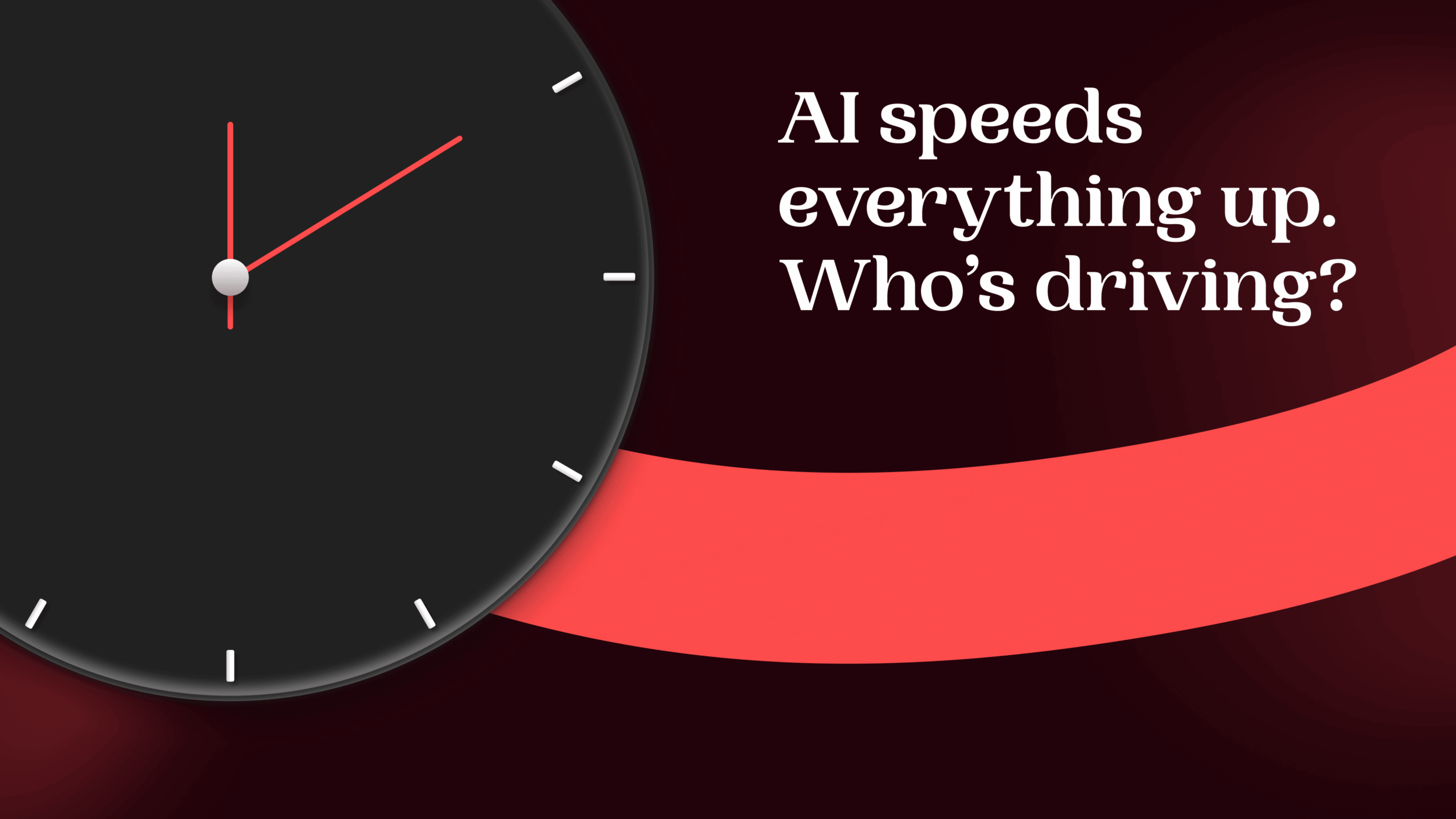
A growing share of production, iterations, and testing relies on AI. Teams prototype faster. They move from draft to test, from test to learning, with less friction. But the more speed increases, the more one question becomes central: who manages trade-offs, message coherence, choice quality, and the priority for the next sprint?
Teams become hybrid: in-house core, external expertise
Most organizations no longer have a monolithic, stable marketing team with fixed roles for years.
We see tighter in-house cores that can carry product, brand, data, and customer knowledge. Around them, external expertise is brought in at the right time, on the right workstream. This is neither an admission of weakness nor a return to the agency model.
A concrete example: at Apiday, the team needed to move from fragmented tactics to a more structured growth engine. Instead of stacking isolated services, a squad was organized around Kelli Parkja (fractional CMO), with several specialized profiles (paid, messaging/copy, design, UX/Webflow, advisory) to build a more coherent, tooled marketing function, and prepare what comes next (framework, templates, process, support for hiring/onboarding).
Varied contexts, one shared commitment: creating impact.
Start-ups, scale-ups, SMEs, large groups: discover how we helped them grow, structure and perform.
Who is concerned and why structure now
Any leadership team that feels the gap between ambition and capacity is concerned. CEOs still carrying the vision on LinkedIn because there is no machine. Heads of Sales waiting for more consistent signals. A PMM isolated somewhere in the org. A Marketing Manager too operational, absorbing the run at the expense of strategy. Growth teams that test fast but spread themselves thin.
The risk, when you do not structure, is well known: you end up in “energy marketing.” Lots of effort, little clarity, and a feeling of stagnation despite activity.
The vision: hybrid marketing by design
In our view, hybrid is not a patchwork. It is a design.
Strategy and execution are no longer two separate phases. They form a continuum. You no longer spend three months writing a plan, then nine months executing it. You build a living system that can integrate weak signals, cut a channel when it stops delivering, and restart a new testing loop without rewriting the entire deck.
Channels become hybrid
Distribution becomes hybrid. You activate, deactivate, reactivate. You combine channels that build brand and channels that generate pipeline. You accept that the best sequence is not the same depending on the market, the moment, the product, or the level of sales maturity. The goal is not to do everything. The goal is to know what to do now, and why.
Tools become hybrid
The stack composes itself: CRM, automation, analytics, SEO, paid, creation, AI. The speed gain is real. But as the stack expands, the need for governance and standards increases. Without simple rules, every new tool adds noise. And noise slows you down.
Complexity increases
International expansion, multi-product setups, proliferating channels, higher proof requirements. Marketing becomes a system. And a system is not managed only with tasks. It is managed with choices.
Freelance,
but never alone
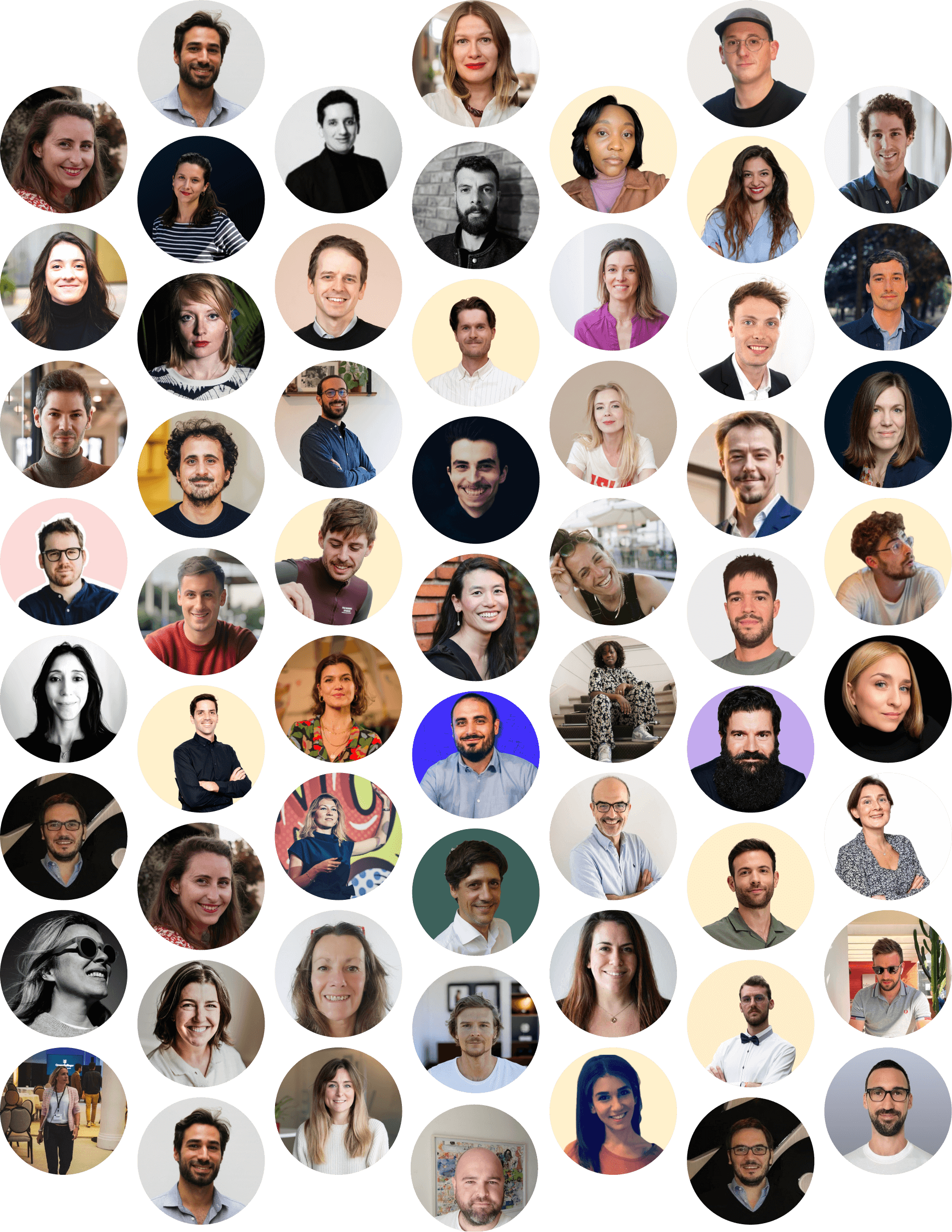
A marketing centre of excellence where freelancers grow together, share, learn and contribute to every mission.
The fractional CMO: a backbone, without rigidity
The fractional CMO model is not a low-cost alternative. It is a modern response to a modern equation.
When a company needs senior marketing leadership, but not necessarily a full-time role immediately, a fractional CMO provides the backbone: vision, priorities, rituals, operating cadence, alignment with the business. The job is not to do instead of the team. The job is to clarify, arbitrate, and enable the team to execute better.

Transitions: parental leave, handover, drift

Take parental leave. On paper, it is a temporary absence. In reality, it is a period when the roadmap continues, decisions still need to be made, the team needs a reference point, and the person leaving needs to be able to disconnect.
In this kind of situation, a common pattern appears: temporary reinforcement (fractional or project-based) maintains continuity—rituals, decisions, deliveries—while documenting and structuring enough so that the return or handover happens without a gap. And often, what was supposed to be a “simple replacement” becomes a maturity lever: the team gains a system (priorities, governance, process) that remains after the transition.
Same logic applies during a transition between two key people: a departure, a hire that takes time, an incomplete handover. These transfer moments are normal. Companies that anticipate them do not experience them as crises. They use them as structuring windows: clarify roles, document decisions, reset priorities, prepare what’s next.
The takeaway: recompose without dispersing
Marketing is becoming hybrid because the world already is, and because a well-orchestrated collective is the best way to move forward on several paths at once, without losing direction.
At Hirondo, our role is exactly here: between vision and field execution, between strategy and production, between long-term brand building and pipeline urgency. Not to add complexity, but to make things readable. Not to over-optimize, but to move things forward.





zde4nj
q8vfvp
ezb8wo
hrbibe
4n8yo2
smgjzy